

If you’re like me, some of your earliest experiences involved riding around Bayport on motorcycles, peeking into old mills and zipping around Barmet Bay in a motorboat called the Sleuth.
All of it vicariously, of course.
Or maybe you were tooling around River Heights in a blue roadster, looking for old clocks and peering in the windows of mysterious bungalows.
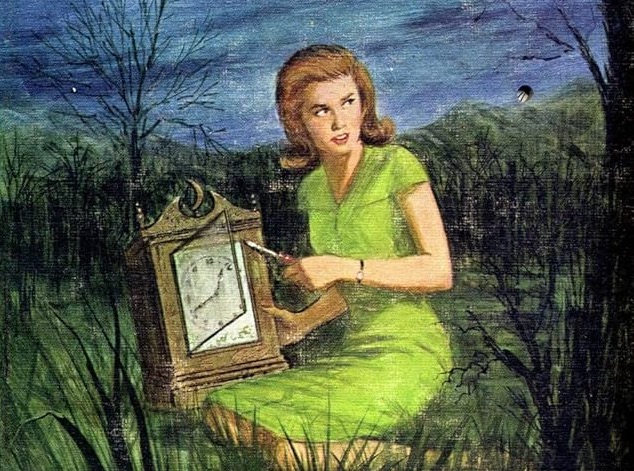
Whether you grew up reading the Hardy Boys or Nancy Drew, you probably thought your series of choice was the one true grail. Anything other than these Grosset and Dunlap canons were strictly apocryphal — series-book wannabes, secondhand shadows of the real thing.
I somehow stumbled onto “The Mystery of the Haunted Skyscraper” — the first in the Power Boys series — in my youth but didn’t seek out any of the other volumes. I also recall finding the Three Investigators’ “Mystery of the Green Ghost” in the school library and thinking it was OK — but I’d really rather check out that haunted fort with Frank and Joe.
You may or may not know that the Hardy Boys and Nancy Drew — along with Tom Swift, Kay Tracy and the Dana Girls — were created by the Stratemeyer Syndicate, a book-packaging company, and sold to publishers like G&D, Cupples and Leon and others.
As an adult, I collect some of those other series created by Edward Stratemeyer, as well as the Hardys and Nancy. You probably do, too, but today I’m going to suggest you broaden your horizons.
Lately, I’ve been getting into a number of series produced by a company called Whitman. I’m talking about the classic Whitman, the former subsidiary of Western Publishing that was based in Racine, Wisconsin. I’m not talking about Albert Whitman and Company, the contemporary publisher of children’s books based in Illinois.
Whitman published the highly collectible Big Little Books, and its parent company published Little Golden Books and Gold Key Comics, but Whitman was also responsible for many juvenile series similar to those produced by the Stratemeyer Syndicate. Some of them are worth a look.
Brains Benton
Let’s start with one you may have heard of, the Brains Benton series. Created by Charles Spain Verral, the books feature Barclay “Brains” Benton and Jimmy Carson, who run the Benton and Carson International Detective Agency from a secret lab above Brains’ parents’ garage.
The stories are told Sherlock Holmes style with Jimmy, code named Operative 3, narrating. Like Dr. Watson or Hercule Poirot’s Captain Hastings, Jimmy provides the common man’s (or common boy’s) point of view of his remarkable friend and colleague.

Verral wrote the first installment, “The Case of the Missing Message.” The remaining five in the original canon are credited to George Wyatt, but Verral had a hand in all of them. Some sources say he farmed out the writing of books 2 through 6 but wasn’t happy with the results and rewrote them himself.
Although Brains and Jimmy are younger than the Hardy Boys or Nancy Drew, the writing of the series is actually a bit more sophisticated with a whimsical, homespun quality that doesn’t take itself too seriously.
The Walton Boys
The three volumes in the Walton Boys series are some of the best researched juvenile series fiction I’ve ever read. Author Hal Burton was a reporter for the New York Daily News whose résumé also included service in the 10th Mountain Division during World War II and promoting skiing in the Adirondacks.
That skiing background really shines in the first of the series, “Gold in the Snow,” when brothers Bert, Ed and Howard Walton search for their uncle’s lost gold mine while on a skiing vacation in Utah. Of course, some nefarious locals get in their way, but the real star of this book is the skiing.

You could almost use “Gold in the Snow” as a how-to for skiing and other winter sports, but Burton manages to get the information across without a data dump in sight.
The second installment, “Rapids Ahead,” gives a similar treatment to the topics of canoeing and camping. The third book, “In High Country,” is my least favorite of the series as the brothers visit a ranch out west. But it still rings with an authenticity that the Hardy Boys’ “The Secret of Wildcat Swamp,” with a similar setting, can’t match.
While Frank and Joe Hardy are sometimes accused of being the same character, the Walton Boys all have distinct personalities, and the ringleader is actually the middle child.
Authorized TV Adventures
A big part of the business model for Whitman and its parent company, Western Publishing, was the use of licensed properties. You may remember the “Star Trek” comics they produced under the Gold Key brand in the 1960s and the many appearances by Disney characters in Little Golden Books.
Whitman also published a series of Authorized TV Adventure books — about the size, shape and length of the Hardy Boys and Nancy Drew series — but featuring characters from popular television shows and movies.
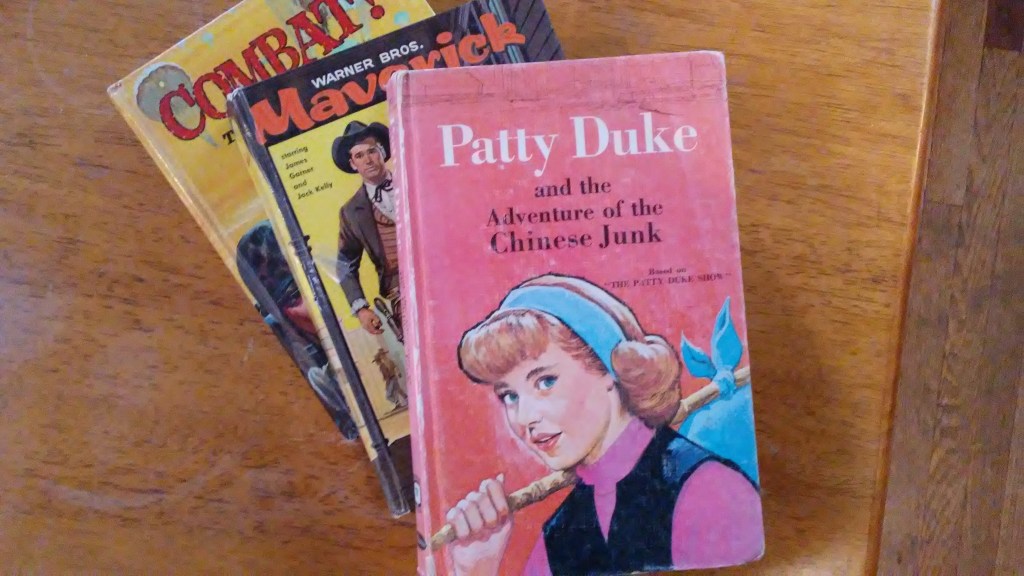
“Patty Duke and the Adventure of the Chinese Junk,” for instance, is based on characters from “The Patty Duke Show,” which ran from 1963 to 1966 on ABC. I went into the book expecting something like the Hardy Boys’ “Mystery of the Chinese Junk” or Nancy Drew’s “Mystery of the Fire Dragon,” but it’s not like that at all.
The book does a good job of faithfully recreating the characters from the TV series while placing them in a different setting and a story that can fill 190 pages. I have other Authorized TV Adventures in my collection based on the series “Maverick” and “Combat,” but I haven’t had a chance to read them yet.
These authorized books are not to be confused with the earlier Whitman Authorized Editions, published from 1941 to 1947, which featured movie stars such as Judy Garland and Ginger Rogers. Often, the stars — or someone like them with the same name — wind up solving a mystery or helping with the war effort.
Final thoughts
I would be remiss if I didn’t mention other Whitman series such as Trixie Belden and Donna Parker. Some booksellers said that Trixie even outsold Nancy Drew and the Hardy Boys, although her books aren’t as well known today. I have a couple of these books on my shelf, as well as a few in the Power Boys series, but haven’t cracked them open yet.
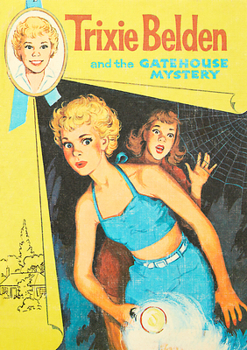
When collecting Whitman titles, you’ll find that the condition of the books themselves isn’t as good as most of the Stratemeyer/Grosset and Dunlap books.
With the exception of some books released during World War II, the Hardy Boys and Nancy Drew books were printed on higher quality paper. The paper in older Whitman titles is more likely to be discolored and brittle.
Some of the Whitman books from the ’60s have matte picture covers, which are still in good shape, but you’ll find the cellophane peeling off many Whitman books published with glossy covers.
The physical condition probably makes the Whitman books less valuable as collectibles, along with the fact that most of them were never as popular, but I’m no expert. My advice is to collect what you like, pay what it’s worth to you, and you’ll never be disappointed.

R.J. Post is the author of the Greenwood Mysteries series of young adult paranormal mysteries, inspired by the old juvenile series but updated for an modern audience with a fair sprinkling of ghosts thrown in. Find them here.
 R.J. Post, author
Leave a comment